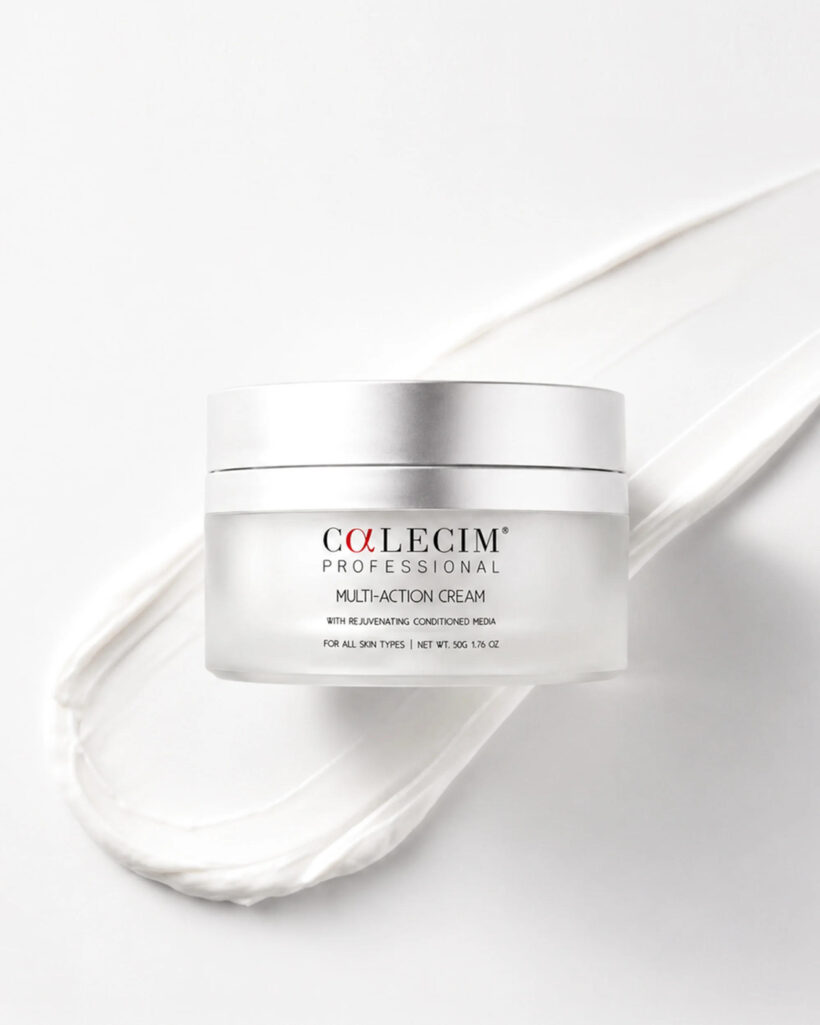
Skin density and elasticity may improve when the skin receives support for collagen, elastin, hydration, and repair signaling together. Aging skin is not just a moisture problem. It also involves structural changes within the extracellular matrix that can affect firmness, resilience, and skin thickness over time.
That is why many people eventually look beyond basic moisturizers and start exploring regenerative skincare approaches. Stem cell skincare products, such as CALECIM® Professional, are intended to improve skin quality through growth factors, exosomes, and cell-signaling technology, which may help address visible thinning, laxity, and texture changes.
Skin density and elasticity can improve when collagen, elastin, hydration, and repair signaling are supported together
Skin density and elasticity are closely tied to collagen structure, elastin integrity, hydration levels, and the skin’s ability to repair itself. Supporting only one pathway often leads to temporary improvements rather than long-term structural changes.
PubMed Central explains that skin aging involves structural and functional changes in collagen, elastin, and extracellular matrix components, which contribute to wrinkles, laxity, and reduced elasticity.
Why aging skin becomes thinner and less firm
As skin ages, fibroblast activity slows down. Fibroblasts are responsible for producing collagen, elastin, and components that help maintain skin structure. Over time, the dermis becomes thinner and less resilient.
Visible signs may include:
- Fine lines that linger after facial movement
- Skin that looks looser around the jawline
- Crepey texture under the eyes or neck
- Reduced bounce when skin is pressed
Hormonal changes can accelerate this process. Estrogen decline during menopause contributes to decreased collagen production, reduced elasticity, moisture loss, dryness, and wrinkling.
Why hydration alone does not restore skin structure
Hydration can temporarily plump the surface of the skin, which may soften the appearance of fine lines. However, moisture alone does not rebuild extracellular matrix support.
This is one reason why some products create a smoother appearance quickly but do not meaningfully improve firmness over time. Structural skin aging involves collagen degradation, elastin fragmentation, inflammation, and slower repair activity beneath the surface.
Loss of elasticity often starts before wrinkles become obvious
Loss of elasticity can begin years before deep wrinkles appear. Many people first notice subtle changes in texture, firmness, or facial contour rather than obvious lines.
Early signs of structural skin aging
Some of the earliest signs include:
- Skin that feels thinner
- Makeup settling differently
- Mild crepey texture
- Reduced firmness around the cheeks or eyes
- Less defined facial contours
These changes are often related to declining structural support rather than dehydration alone.
Why skin can look looser even without major volume loss
Not all facial aging is caused by fat loss. Skin itself can become less supportive as collagen and elastin decline.
This is important because people sometimes assume they need fillers immediately when the issue may partly involve declining skin quality. Improving skin texture, hydration, elasticity, and repair signaling may help skin appear firmer even before volume-based procedures are considered.
Why many anti-aging products improve texture temporarily but fail to rebuild skin quality long-term
Some anti-aging products improve the appearance of the skin quickly because they hydrate, exfoliate, or temporarily smooth the surface. Long-term skin quality improvement is more complex.
Temporary plumping vs structural repair
Ingredients like humectants can increase water retention in the outer layers of the skin. This may create a smoother appearance for several hours or days.
Structural repair is different. It involves:
- Fibroblast activity
- Collagen remodeling
- Elastin support
- Extracellular matrix maintenance
- Inflammation regulation
That process typically takes longer and depends on consistent signaling within the skin.
Why chronic inflammation accelerates visible skin aging
Low-grade chronic inflammation can contribute to collagen breakdown and extracellular matrix degradation over time.
MDPI reports that chronic low-grade inflammation and senescent fibroblast activity can contribute to extracellular matrix degradation and visible skin aging.
This helps explain why calming inflammation may matter for healthy-looking skin aging, especially in people with environmental stress exposure, sensitivity, or post-procedure irritation.
How regenerative stem cell skincare works differently from traditional anti-aging products
Regenerative skincare aims to support the skin’s natural repair communication systems rather than simply coating the surface with active ingredients.
How growth factors and exosomes support skin signaling
Growth factors and extracellular vesicles are involved in cellular communication. These signals help regulate inflammation, repair, proliferation, and remodeling processes.
PMC states that extracellular vesicle signaling participates in inflammation, proliferation, and remodeling during skin wound healing and repair.
This does not mean every stem cell skincare product works the same way. Formulation quality, concentration, stability, and delivery systems can vary significantly.
Why cellular communication matters for elasticity and repair
Skin repair depends heavily on communication between cells. Fibroblasts, keratinocytes, and inflammatory cells constantly exchange signals that influence healing and structural support.
PubMed reports that topical growth factor preparations have shown supportive evidence for facial skin rejuvenation based on investigator- and participant-reported outcomes.
This is part of the reason regenerative skincare has gained attention in medical aesthetics and post-procedure skin recovery.
How CALECIM® Professional Multi-Action Cream may help support firmer, denser-looking skin
CALECIM® Professional Multi-Action Cream is designed for concerns such as skin laxity, wrinkles and folds, and loss of skin density.
What PTT-6® is designed to do
PTT-6® is CALECIM’s proprietary ingredient blend derived from ethically sourced stem cell technology. The product focuses on growth factors, exosomes, and signaling proteins intended to support skin renewal and repair communication.
According to CALECIM® Professional, PTT-6® showed:
- 56% increase in elastin expression
- 83% increase in HA expression
- 42% more skin cell growth at 7 days
- 600% average improvement in skin density
These findings came from in-vitro cell-based assays using human keratinocytes and fibroblasts.
Research on elastin expression, HA signaling, and skin density
According to PubMed, CALECIM® Professional Multi-Action Cream has been studied for skin elasticity using conditioned media derived from cord lining mesenchymal stem cell culture.
While these findings are promising, results can vary depending on skin condition, age, consistency, and overall treatment approach.
Retinol, fillers, and regenerative skincare improve aging skin in different ways
Different anti-aging approaches target different concerns. One option is not automatically better than another.
| Treatment | Best For | Limitations |
|---|---|---|
| Retinoids | Texture, fine lines, photodamage | Irritation and dryness can occur |
| Fillers | Volume loss and contour restoration | Do not directly improve skin quality |
| Regenerative skincare | Skin quality, elasticity, repair support | Results are gradual and vary |
Which options target skin texture
PMC reviewed randomized controlled trials and found that topical tretinoin can improve clinical signs of photoaging, including fine lines and skin texture.
Retinoids are among the most studied skincare ingredients for texture-related aging concerns.
Which options support structural skin quality
Regenerative skincare like CALECIM® focuses more on repair signaling, extracellular matrix support, and fibroblast communication.
This may make it appealing for people experiencing:
- Crepey texture
- Early laxity
- Thin-looking skin
- Post-procedure recovery
- Sensitive aging skin
When combination approaches may make sense
Some people combine regenerative skincare with retinoids, lasers, microneedling, or fillers depending on their goals.
Fillers help restore lost fullness to areas such as the face, lips, and hands.
American Society of Plastic Surgeons reports that hyaluronic acid products were the most popular fillers, with more than 5.3 million procedures performed in 2024.
Fillers may help when volume replacement is the primary issue, while regenerative skincare may support ongoing skin quality maintenance.
How long it may take to notice improvements in skin density and elasticity
Visible improvements in skin quality usually take time because collagen remodeling and repair signaling occur gradually.
What affects visible results
Results can vary based on:
- Age
- Hormonal status
- Sun exposure history
- Inflammation levels
- Product consistency
- Existing skin damage
- Combination treatments
Some people notice hydration and texture improvements earlier than firmness changes.
Why consistency matters more than intensity
Skin remodeling happens through repeated signaling over time, not one aggressive treatment session.
Using regenerative skincare consistently may support better long-term outcomes than cycling through harsh or overly irritating routines.
When skincare may help and when procedures may still be worth considering
Skincare may help improve texture, hydration, elasticity, and visible skin quality. However, topical products have limitations.
Regenerative skincare may be most useful for:
- Early skin laxity
- Crepey texture
- Thin-looking skin
- Maintenance after aesthetic procedures
- Sensitive aging skin
Procedures may still be appropriate when concerns involve:
- Significant volume loss
- Advanced sagging
- Deep folds
- Structural facial changes
The best approach often depends on whether the primary issue is skin quality, facial volume, or both.
FAQ
Can skincare really improve skin density?
Skincare may help support skin density when it targets collagen, elastin, hydration, and repair signaling together. Results vary depending on the product, consistency, age, and overall skin condition.
What causes skin elasticity loss?
Skin elasticity declines due to aging, collagen breakdown, elastin fragmentation, hormonal changes, UV exposure, inflammation, and slower fibroblast activity.
Can skin density improve after menopause?
It may improve to some degree with consistent skincare, hydration, barrier support, and treatments that support collagen and extracellular matrix function. Hormonal changes can make improvement slower or more gradual.
Is stem cell skincare scientifically proven?
Some regenerative skincare ingredients, growth factors, and conditioned media have supportive research behind them, but evidence quality varies between products and formulations.
How is regenerative skincare different from retinol?
Retinoids primarily increase skin cell turnover and improve texture. Regenerative skincare focuses more on repair signaling, fibroblast support, and extracellular matrix communication.
Can CALECIM® help crepey skin?
CALECIM® Professional skincare products may help support hydration, elasticity, and skin quality in crepey-looking skin, particularly when thinning and laxity are contributing factors.
How long does it take to improve firmness?
Visible changes may take weeks to months depending on skin condition, consistency, and whether skincare is combined with professional treatments.
Is thinning skin reversible?
Some aspects of thinning skin may improve with supportive skincare, collagen stimulation, hydration, and healthy skin repair processes. Advanced structural aging may still require procedural approaches.
Conclusion
Restoring skin density and elasticity is usually about more than hydration alone. Aging skin changes involve collagen decline, elastin fragmentation, inflammation, extracellular matrix breakdown, and slower repair signaling.
That is why regenerative skincare has become increasingly interesting for people looking beyond temporary surface improvements. CALECIM® Professional is designed to support skin quality through growth factors, exosomes, and repair communication pathways that may help improve the appearance of firmness, texture, and density over time.
For people experiencing early laxity, crepey texture, or thinning skin, regenerative skincare may be a useful part of a broader long-term skin maintenance strategy.


 Alcatraz Dey


 Walking Dead
 Guest Contributor
 Avishek Singha